Expanding into new markets with HbbTV
This article is part of a series based on presentations from the HbbTV Symposium and Awards 2025, bringing together insights from across the industry on the future of broadcast services and connected television. Covering topics from broadband-only delivery and addressable advertising to interoperability and evolving standards, the series captures key discussions and expert perspectives shaping the next phase of HbbTV and the wider TV ecosystem.
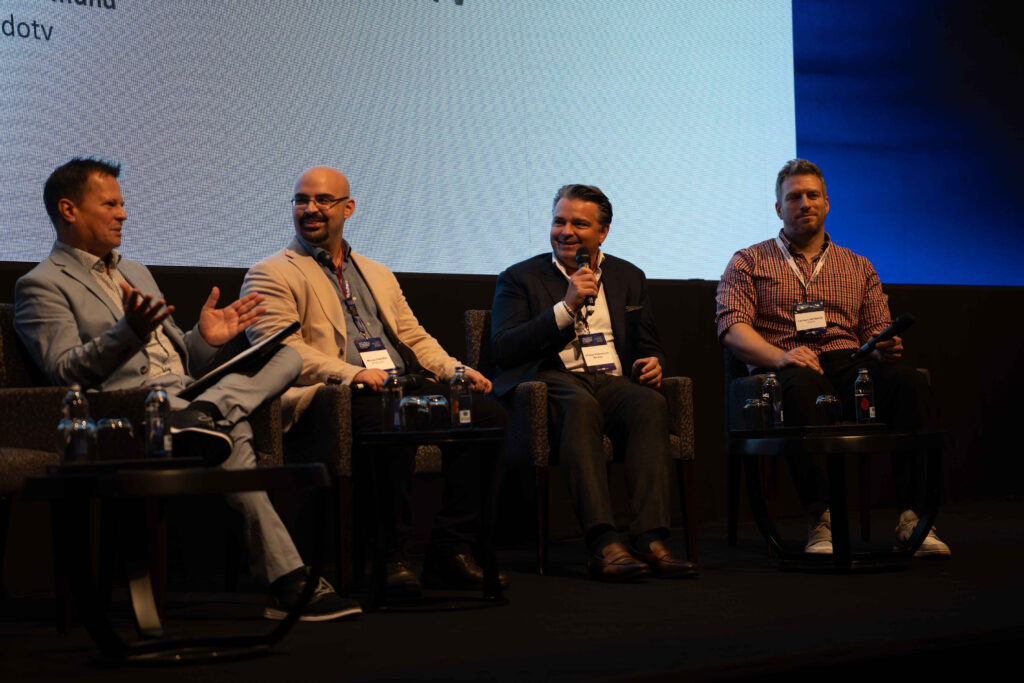
One of the key discussions at the HbbTV Symposium 2025 focused on how broadcasters, platforms and technology providers can use HbbTV to expand into new markets. Moderated by journalist Jörn Krieger, the roundtable brought together Mousa Fakher, Business Development Manager at Eutelsat, Philipp Rotermund, CEO and Co-Founder of wedotv, and Laurent Werner, Senior Pre-Sales Manager at Didomi. Together, they explored the practical realities of scaling services internationally across distribution, monetisation and regulation.
A central theme was the importance of hybrid distribution. Mousa Fakher explained how combining satellite and streaming can unlock new audiences, particularly in regions where traditional broadcast infrastructure remains dominant. By enabling FAST-style linear channels to be delivered via satellite and enhanced through HbbTV, broadcasters can retain the reach of broadcast while adding interactivity and monetisation capabilities.
This hybrid approach is already being used to expand into regions such as Europe and the Middle East and North Africa, where free-to-air satellite continues to play a significant role. Through platforms such as Sat.tv and hybrid FAST distribution, HbbTV enables a more modern, app-like experience, bridging the gap between traditional broadcasting and streaming.
For content providers, Philipp Rotermund highlighted that distribution remains the defining challenge. As CEO of wedotv, he described how the company has evolved from a pure streaming service into a global network of linear channels. Success depends on being present across all platforms, from apps and connected TVs to satellite and broadcast networks. As he put it, while content is important, distribution is critical to reaching audiences at scale.
However, this multi-platform strategy comes with significant complexity. Developing applications across a wide range of smart TV operating systems is resource-intensive. Here, HbbTV offers a clear advantage. A single HbbTV application can reach a large installed base of connected TVs, simplifying deployment and accelerating entry into new markets.
Monetisation was another key focus of the discussion. Fakher explained how HbbTV enables new revenue streams by combining the scale of broadcast with digital advertising capabilities. Through features such as targeted advertising and audience measurement, even free-to-air satellite channels can benefit from data-driven monetisation. This creates a more compelling commercial model, particularly in markets where traditional advertising revenues are under pressure.
Rotermund reinforced this point by describing how wedotv uses HbbTV to generate measurable audiences and build its own data sets. These insights can then be used to attract advertisers and support revenue generation across both broadcast and digital channels.
Werner brought a different but equally important perspective, focusing on the role of regulation and data privacy. As a representative of Didomi, he highlighted how requirements such as GDPR and similar frameworks in other regions add complexity to market expansion. Consent management, data collection and targeted advertising must all be adapted to local regulations, which can vary significantly between countries.
This makes it difficult to apply a single global model. Companies must consider not only the technology and business model, but also the legal and regulatory environment in each market. Without this, there is a risk of revenue loss or compliance issues.
The panel also explored the challenges of differing market conditions. Fakher pointed out that infrastructure varies widely between regions. In some markets, particularly outside Europe, television services are primarily delivered via set-top boxes rather than directly through connected TVs. This can limit the reach of HbbTV applications and requires alternative approaches to service delivery.
This reinforces a key lesson highlighted by all participants. What works in one market does not necessarily translate to another. Local conditions, including infrastructure, language, culture and regulation, must all be taken into account.
Across the discussion, one factor stood out as essential to success: collaboration. All three panellists emphasised the importance of partnerships. Whether working with satellite operators, technology providers or data specialists, no single organisation can address all aspects of market expansion alone. Strong partnerships enable companies to combine expertise, reduce complexity and accelerate growth.
Audience measurement was also identified as a critical enabler. The ability to demonstrate reach and engagement is fundamental to monetisation. HbbTV provides new tools to support this, allowing broadcasters and platforms to build more accurate and actionable audience insights.
The discussion concluded with a clear message. Expanding into new markets with HbbTV offers significant opportunities, but it requires flexibility, local understanding and strong collaboration between ecosystem players.
As the television landscape continues to evolve, those who can combine the reach of broadcast, the capabilities of streaming and the intelligence of data will be best positioned to succeed.
Watch the presentation and explore further
You can watch the full presentation from the HbbTV Symposium 2025 here: Watch the Video
Next in the series
Explore why HbbTV remains essential in a broadband-only future, as Matthew Huntington examines how the standard continues to provide interoperability, stability and TV-specific functionality in an increasingly IP-driven television landscape.