Empowering broadcasters in MENA: HbbTV tools driving advertising and revenue growth

This article is part of a series based on presentations from the HbbTV Symposium and Awards 2025, bringing together insights from across the industry on the future of broadcast services and connected television. Covering topics from broadband-only delivery and addressable advertising to interoperability and evolving standards, the series captures key discussions and expert perspectives shaping the next phase of HbbTV and the wider TV ecosystem.
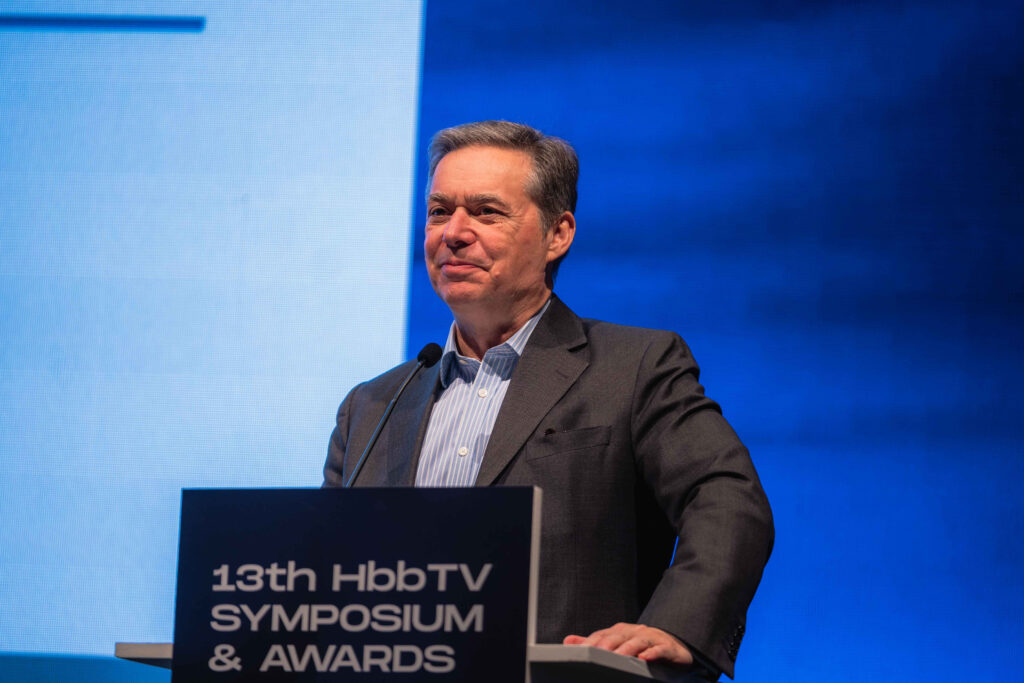
Atila Madakbaş, Founder and CEO of Admongrel and Mongrel Live
At the HbbTV Symposium 2025, Atila Madakbaş, Founder and CEO of Admongrel and Mongrel Live, presented a practical perspective on how HbbTV is helping broadcasters across the Middle East and North Africa (MENA) unlock new revenue opportunities and gain deeper insight into their audiences.
While much of the industry’s attention focuses on advertising, Madakbaş argued that the value of HbbTV extends far beyond direct monetisation. For broadcasters, the technology can also support audience growth, content optimisation and strategic decision-making, creating both direct and indirect revenue opportunities.
His own journey with HbbTV began in Türkiye in 2018 with an application for national broadcaster TRT. Initial expectations were modest, but within a week the service had reached around 800,000 connected households, significantly exceeding forecasts. For Madakbaş and his team, this was a clear demonstration of the scale of the opportunity and the beginning of a much broader focus on audience measurement and analytics.
Today, the company collects data across multiple satellite platforms and works with hundreds of television channels, reaching tens of millions of connected households. This data has become the foundation for a suite of tools designed to help broadcasters understand how audiences engage with their content.
A key theme of the presentation was the importance of measurement. Traditional audience measurement systems often provide broad trends and overnight reporting, but connected television enables a far more detailed exploration of viewer behaviour. Broadcasters can analyse audience engagement in near real time, identify which programmes are attracting viewers and understand how audiences move between channels and services.
This information can have a direct commercial impact. By understanding what content performs best and how audiences behave, broadcasters can make more informed programming decisions and optimise schedules to maximise viewing and advertising revenues.
The presentation also explored how HbbTV is enabling broadcasters to adopt more sophisticated advertising strategies. Standard capabilities such as geographic targeting, device targeting and audience segmentation are now becoming commonplace. However, Madakbaş believes the next stage of development will be driven by richer contextual understanding.
Through AI-driven analysis, broadcasters can move beyond basic audience targeting and begin to understand the context of the content being viewed. Factors such as programme genre, sentiment and viewer engagement can potentially be used to improve the relevance of advertising and enhance campaign performance.
A variety of advertising formats are already being deployed across HbbTV-enabled services. These include banner advertising, programme guide sponsorship, portal advertising and video-based formats. The company is also exploring ad replacement technologies that allow different viewers to receive different advertisements within the same broadcast environment, depending on targeting criteria.
Another area highlighted was the growing role of demand-side platforms and digital advertising ecosystems. Rather than treating television advertising as a separate market, broadcasters increasingly need to integrate their inventory into broader digital advertising workflows. This allows connected TV campaigns to be bought, measured and optimised alongside other digital channels.
Madakbaş described this as a critical step in scaling HbbTV advertising. While connected TV campaigns have demonstrated strong performance, many deployments remain project-based and relatively small in scale. Greater integration with digital advertising systems can help unlock larger budgets and make HbbTV inventory easier for advertisers to access.
The presentation also highlighted the importance of partnerships. Broadcasters, technology providers, agencies and advertisers all play a role in developing sustainable connected TV ecosystems. In emerging markets, collaboration is often essential to overcome technical and commercial barriers and accelerate adoption.
Looking ahead, Madakbaş sees significant potential for continued growth across the MENA region. Connected television adoption continues to increase, while broadcasters are becoming more sophisticated in their use of audience data and advertising technology. At the same time, AI and advanced analytics are opening new possibilities for understanding viewer behaviour and improving monetisation.
His conclusion was that HbbTV should not be viewed solely as an advertising platform. Instead, it is a broader business tool that can help broadcasters increase audience engagement, improve content performance and generate new revenues.
For broadcasters operating in increasingly competitive markets, these capabilities offer an opportunity not only to monetise connected audiences more effectively, but also to strengthen the core broadcast business that underpins their long-term success.
Watch the presentation and explore further
You can watch the full presentation from the HbbTV Symposium 2025 here: Watch the Video
The presentation slides are also available to download: Download the presentation
Next in the series
Discover how broadcasters can position HbbTV advertising to compete more effectively with digital platforms. Cem Eroğlu explores the importance of audience targeting, measurement, identity and programmatic integration, arguing that connected TV inventory must be sold and managed like modern digital advertising.