Selling HbbTV inventory like ‘YourTube’
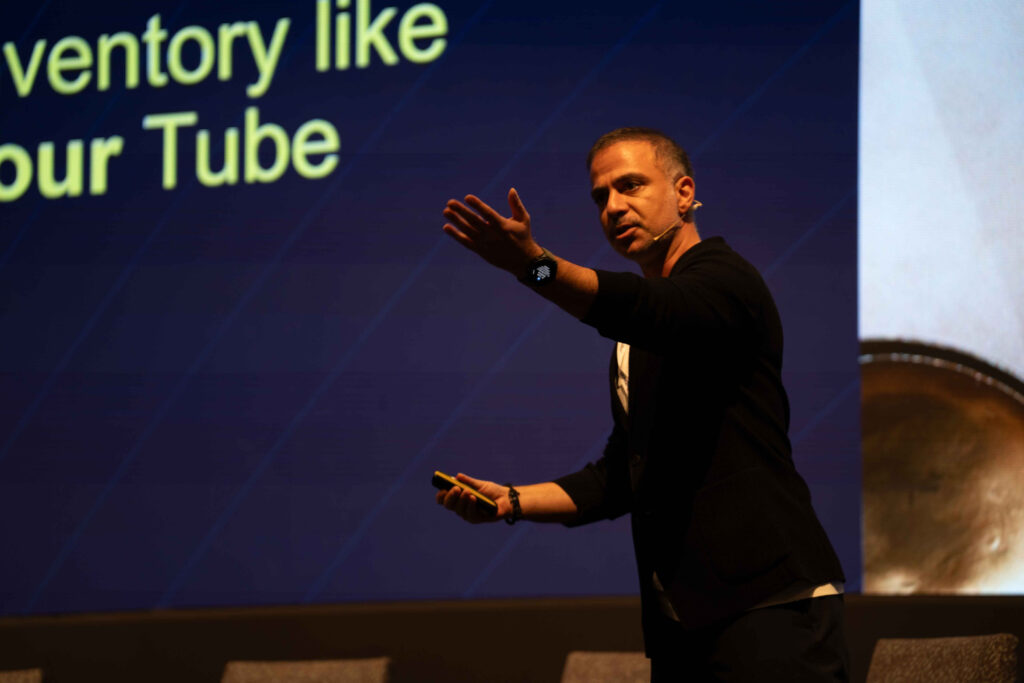
This article is part of a series based on presentations from the HbbTV Symposium and Awards 2025, bringing together insights from across the industry on the future of broadcast services and connected television. Covering topics from broadband-only delivery and addressable advertising to interoperability and evolving standards, the series captures key discussions and expert perspectives shaping the next phase of HbbTV and the wider TV ecosystem.
Cem Eroğlu, Vice President for Central Asia, Turkey, the Middle East and Africa at Adform
At the HbbTV Symposium 2025, Cem Eroğlu, Vice President for Central Asia, Turkey, the Middle East and Africa at Adform, delivered a provocative keynote that challenged broadcasters, platform operators and technology providers to rethink how they position and monetise HbbTV advertising inventory.
His central argument was straightforward. HbbTV has many of the technical capabilities needed to compete for digital advertising budgets, but too often it is still being sold as a standalone television product rather than as part of the wider digital advertising ecosystem.
Eroğlu contrasted the HbbTV ecosystem with large digital platforms such as YouTube. Advertisers are drawn to these platforms not only because of their scale, but because they are easy to buy, easy to measure and easy to integrate into broader advertising campaigns. Campaign planning, audience targeting, reporting and optimisation are all delivered through familiar digital workflows.
By comparison, the open television ecosystem can appear fragmented and complex. Multiple technology providers, advertising platforms, workflows and integrations can create barriers for advertisers who are accustomed to the simplicity of digital platforms.
Yet, according to Eroğlu, this complexity should not be viewed as a weakness. It is the result of an open ecosystem where broadcasters, technology providers and advertisers retain greater control over their businesses. The challenge is to package and present that capability in a way that matches the expectations of modern advertisers.
A recurring theme throughout the keynote was that audience size alone is no longer enough. Broadcasters often highlight the scale of their reach, measured in households or viewers, but advertisers increasingly focus on how inventory contributes to broader marketing objectives.
To compete effectively, HbbTV advertising needs to be integrated into the full marketing funnel, alongside mobile, web, social and other digital channels. This means enabling advertisers to understand how television impressions contribute to awareness, engagement, consideration and ultimately sales.
In practical terms, that requires robust advertising technology infrastructure. Audience targeting, frequency management, attribution, reporting and measurement are now essential components of the advertising ecosystem. Broadcasters can no longer rely solely on the traditional strengths of television. Instead, they must combine television’s scale and impact with the accountability and flexibility of digital advertising.
Türkiye was highlighted as a market where significant progress has already been made. Through collaborations between technology providers, broadcasters and advertising partners, HbbTV inventory is increasingly being integrated into broader programmatic and data-driven advertising campaigns. This allows connected TV inventory to be planned, bought and measured alongside other digital channels.
One of the key enablers is identity management. Eroğlu argued that the future of advertising is increasingly centred on identity rather than cookies. Connected TVs, mobile devices, websites and other digital environments all generate identifiers that can be used, within privacy regulations, to improve audience understanding and campaign effectiveness.
When these identifiers can be connected across channels, advertisers gain a more complete view of campaign performance. HbbTV inventory then becomes part of a broader, measurable digital advertising strategy rather than an isolated television buy.
The keynote also highlighted the importance of first-party and third-party data. Broadcasters that can combine their own audience insights with external data sources are better positioned to deliver targeted advertising solutions that compete with global digital platforms. Integration with retail media networks and other emerging data ecosystems was cited as a growing opportunity.
Throughout the presentation, Eroğlu repeatedly returned to a simple message: broadcasters should stop thinking of HbbTV inventory as merely television advertising. Instead, they should view it as premium digital inventory delivered on the largest screen in the home.
This shift in mindset has implications far beyond advertising technology. It influences how inventory is packaged, sold, measured and valued. It also affects how broadcasters position themselves against increasingly powerful global competitors.
The conclusion was both a challenge and an opportunity. The advertising budgets that broadcasters seek are already flowing into highly automated digital ecosystems. To capture a larger share of those budgets, HbbTV services must become easier to buy, easier to measure and easier to integrate into multi-channel campaigns.
The technology already exists. The task now is to use it in a way that allows broadcasters to sell their inventory with the same confidence, flexibility and accountability as the world’s largest digital platforms.
Watch the presentation and explore further
You can watch the full presentation from the HbbTV Symposium 2025 here: Watch the Video
The presentation slides are also available to download: Download the presentation
Next in the series
Explore how HbbTV is transforming television advertising, as broadcasters, manufacturers, measurement specialists and technology providers discuss addressable advertising, audience data, trusted measurement and the steps needed to scale HbbTV advertising across Europe and beyond.